
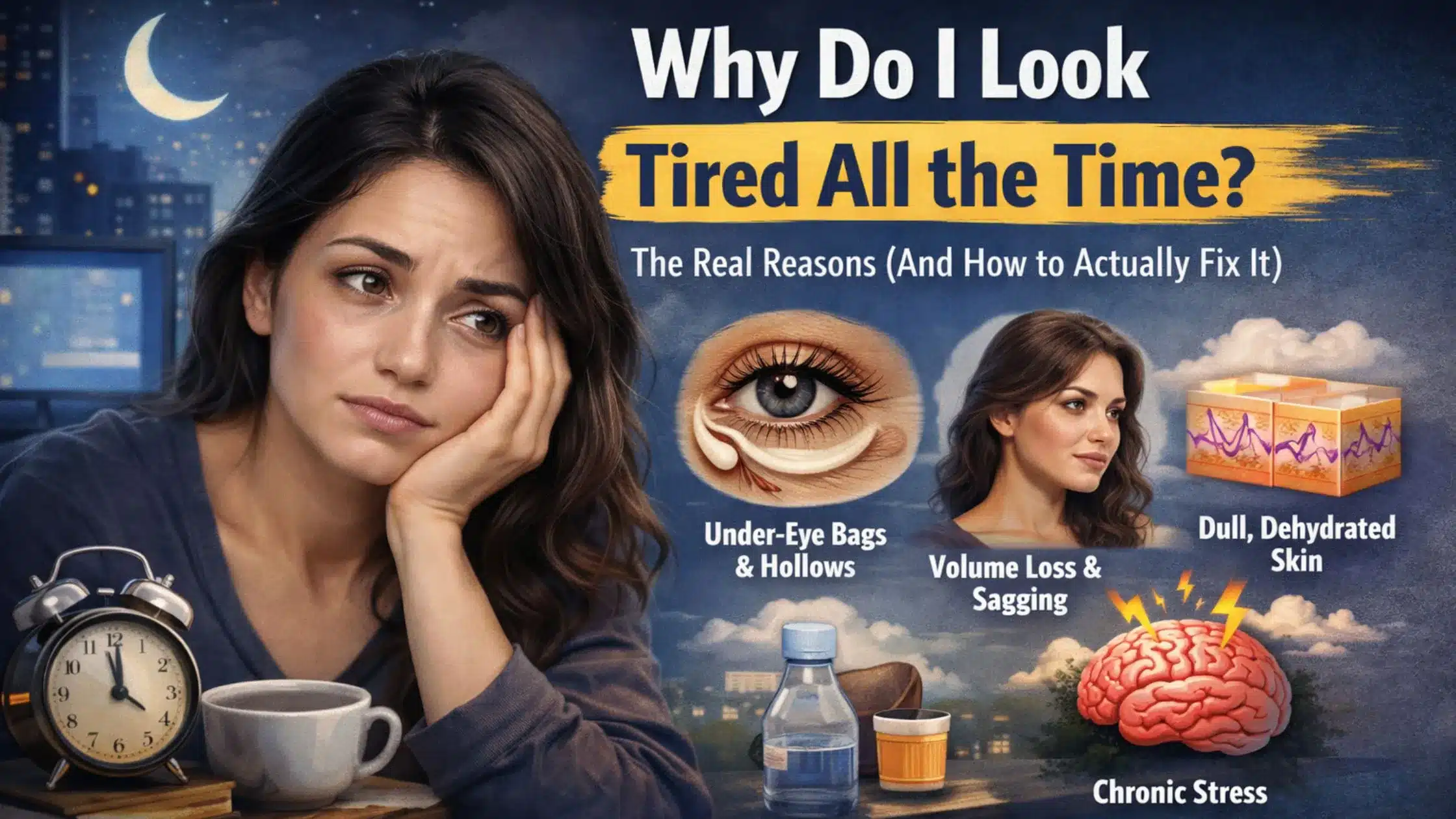
Looking tired all the time is a physical appearance caused by anatomical changes, aging, or specific lifestyle factors rather than just a lack of sleep. Key reasons you might look exhausted include midface volume loss (sagging), under-eye hollowing, thin or dull skin, fluid retention (bags), and chronic stress or dehydration. While many people blame a late night, a “tired” face is typically the result of how shadows fall across your features due to structural changes in your skin and facial fat pads.
To stop looking tired, you must address the root causes of these shadows. This guide explores the biological and environmental factors that contribute to a perpetually fatigued appearance and offers practical strategies to reclaim a refreshed look.
Table of Contents
The Science of Facial Fatigue: It’s Not Just About Sleep
Many people believe that sleep is the only factor in how rested they look. However, you can sleep for ten hours and still wake up to someone asking, “Are you feeling okay? You look tired.” This happens because looking tired is an optical illusion created by facial geometry.
In a youthful face, light reflects evenly off smooth, full surfaces. As we age or deal with health stressors, those surfaces become concave or uneven. These indentations catch light and create dark shadows. In the world of dermatology and aesthetics, “tired” is essentially a synonym for “shadowed.” If you want to fix the look, you have to address the physical reasons those shadows exist.
1. Midface Volume Loss: The Main Structural Culprit
Midface volume loss is the natural shrinking and shifting of fat pads in your cheeks as you age. These fat pads act as the “scaffolding” for your face. When they deflate or slide downward due to gravity, the skin on the upper part of your face loses its support.
When the cheek loses volume, it creates a gap between the lower eyelid and the cheekbone. This gap is known as a tear trough deformity. This groove creates a permanent, dark shadow that runs from the inner corner of the eye down toward the cheek. Because this is a physical “valley” in your face, no amount of sleep can fill it back in. This is why many people wonder, “why do i always look tired” even after a full night of rest. It is a loss of internal support, not a lack of energy.
2. Under-Eye Bags and Fat Herniation
Under-eye bags are bulges caused by the weakening of the membrane that holds facial fat in place around the eye. This membrane, called the orbital septum, can thin out over time or due to your genetics. When it weakens, the fat that normally cushions the eyeball pushes forward.
This creates a “hill and valley” effect. The bulge (the hill) catches the light, while the area directly underneath it (the valley) falls into a deep shadow. This contrast is a primary reason why do my eyes look tired all the time. Unlike temporary puffiness from a salty meal, these structural bags are usually permanent without professional intervention. This bulging fat often requires a surgical approach like a blepharoplasty to fix permanently.
3. Thinning Skin and Visible Dark Circles
Thinning skin is the process where the dermis loses collagen and elastin, making it more translucent. The skin under the eyes is already the thinnest on the entire body. As we age or deal with sun damage, it becomes so thin that it no longer hides what lies beneath.
When skin is translucent, you are seeing the dark purple blood vessels and the dark orbital bone through the surface. This creates a bruised, darkened look. If you are asking “why do i look tired,” it might simply be that your skin has become too thin to mask the natural anatomy of your face. This is also why dark circles are often more visible on people with fair skin or deep-set eyes.
4. Lifestyle Factors That Make You Look Fatigued
While anatomy is the foundation, your daily habits can make those structural shadows look much deeper and darker.
Chronic Dehydration and Skin Dullness
Chronic dehydration is a state where the body lacks enough water to keep skin cells “plumped.” When you are dehydrated, your skin loses its volume and clings more tightly to the underlying bone structure. This makes hollows look deeper and gives the complexion a gray, ashy tone.
Dehydrated skin also reflects light poorly. Instead of a healthy “glow,” the skin looks matte and flat, which accentuates every fine line and wrinkle. Ensuring you drink enough water is the easiest way to give your skin a natural, internal “lift.”
High Salt Intake and Morning Edema
High salt intake causes the body to retain excess fluid, which leads to swelling in the thin tissues around the eyes. This is known as morning edema. Because you are lying flat at night, fluid settles in your face. This stretches the skin and creates temporary bags that cast heavy shadows. Over time, this constant stretching can lead to permanent skin laxity, making you look tired even when the swelling goes down.
Digital Eye Strain and Blue Light
Digital eye strain is the exhaustion of eye muscles caused by staring at blue-light screens for long periods. Most of us spend 8+ hours a day looking at computers or phones. This constant squinting and tension increases blood flow to the area, which can cause blood vessels to dilate. Through thin under-eye skin, these dilated vessels look like dark, heavy circles. Furthermore, the blue light from screens can disrupt your circadian rhythm, affecting your skin’s natural repair cycle at night.
5. How to Not Look Tired All the Time: Practical Solutions
Fixing a tired appearance requires a combination of surface-level skincare and addressing the underlying facial structure.
Essential Skincare Ingredients
To improve the surface of the skin and reflect more light, look for these specific ingredients:
- Caffeine: This acts as a vasoconstrictor. It shrinks blood vessels and helps drain excess fluid, making it the best quick fix for morning puffiness.
- Hyaluronic Acid: This molecule holds 1,000 times its weight in water. It pulls moisture into the skin to “plump” it up, which helps smooth out minor hollows.
- Retinol: This is the gold standard for building collagen. Over time, it helps thicken the under-eye skin so dark vessels are less visible.
- Vitamin C: This helps brighten the skin and fight the oxidative stress that leads to dullness and sallow tones.
Immediate Daily Habits
- Elevate Your Head: Using an extra pillow at night helps gravity drain fluid away from your face, preventing “morning bags.”
- Cold Therapy: Applying a cold roller or cold spoons in the morning constricts blood vessels and reduces swelling instantly.
- Allergy Management: Chronic rubbing of the eyes due to allergies can cause hyperpigmentation and swelling. Taking an antihistamine can often clear up “allergic shiners.”
- Sun Protection: UV rays are the #1 cause of collagen loss. Wearing SPF and sunglasses prevents the skin from thinning prematurely.
Professional and Cosmetic Treatments
If your “tired” look is caused by deep structural hollows, topical creams have limits:
- Dermal Fillers: A professional can “fill” the tear trough hollow with a gel (like hyaluronic acid), removing the shadow and making the area look bright and flat.
- Chemical Peels: These can help remove hyperpigmentation and “resurface” the skin to reflect light better.
- Blepharoplasty: This is a minor surgery to remove or reposition the fat causing under-eye bags for a permanent “rested” look.
6. The Impact of Chronic Stress and Cortisol
Chronic stress is a state where high cortisol levels break down the collagen in your skin and dull your complexion. When you are stressed, your body enters “survival mode,” diverting blood flow away from your skin to your vital organs like the heart and lungs.
This leaves your face looking pale, sallow, and “sunken.” High cortisol also causes the skin to produce more oil, which can lead to inflammation and a “cluttered” complexion. Managing stress through exercise, meditation, or better work-life balance isn’t just a mental health tip; it is a vital part of maintaining a vibrant, healthy, and rested appearance.
Frequently Asked Questions
Why do i look tired all the time?
Looking tired all the time is usually caused by anatomical changes like midface volume loss (sagging cheeks) or under-eye hollowing. These structural changes create shadows on the face that persist regardless of how much sleep you get. Other factors include thinning skin, genetics, and chronic dehydration.
Why are my eyes so tired when i wake up?
This is often due to fluid retention or “edema” overnight. When you lie flat, fluid settles in the thin tissues around the eyes. High salt intake the night before or sleeping face-down can exacerbate this, making eyes look puffy and strained upon waking.
Why do my eyes look tired all the time?
This is typically caused by the “tear trough” deformity or under-eye fat herniation (bags). When the fat pads under the eyes bulge or the skin becomes translucent, it creates a dark, sunken appearance that does not change with rest.
Why do i always look tired?
A primary culprit is often chronic dehydration or a diet high in processed foods. These factors make the skin lose its glow and “sink” into the facial structure. Additionally, poor posture and “tech neck” can affect blood flow to the face, contributing to a dull, tired complexion.
How to not look tired all the time?
To fix a tired appearance, use skincare containing caffeine for puffiness and hyaluronic acid for hydration. Lifestyle changes like decreasing salt intake, increasing water consumption, and using blackout curtains can help. For structural issues, cosmetic treatments like dermal fillers or a blepharoplasty may be necessary.

Leave a Reply