
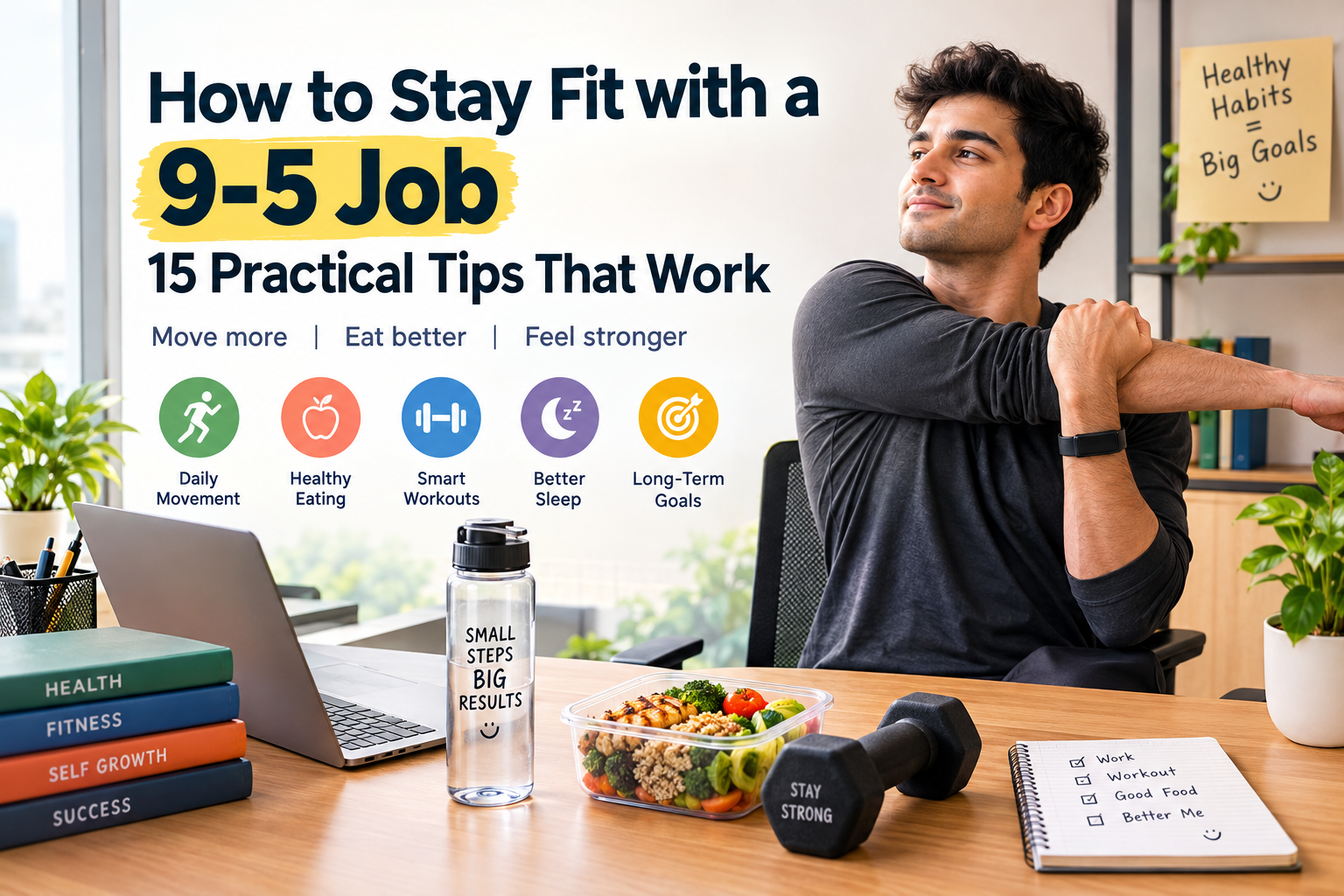
You can stay fit with a 9-5 job by moving often, planning short workouts, eating smart, and sleeping well. Small daily habits beat long gym sessions. Keep reading to learn 15 simple tips you can start today, even when busy.
The CDC reports that only about 1 in 4 US adults meet both aerobic and muscle-strengthening guidelines. Long desk hours widen that gap. This guide explains how to stay fit with a 9-5 job without burning out. You do not need a perfect plan. You need a realistic one. Each tip below is short, simple, and easy to repeat.
Table of Contents
- Why a Desk Job Makes Staying Healthy So Hard
- Smart Fitness Habits to Build Before Work Starts
- Easy Ways to Stay Active During Office Hours
- Healthy Routines to Follow After Your Workday Ends
- Small Lifestyle Changes That Keep You Fit Long Term
- Sample Weekly Plan for Busy Professionals
- Ready to Feel Stronger? Take Your First Step Today
- Key Takeaways
- FAQs
Why a Desk Job Makes Staying Healthy So Hard
Desk jobs mean long hours of sitting. Deadlines drain your energy. By evening, you feel too tired to move. Many people skip exercise for this reason. Your commute adds to the problem. You sit in the car or on the train. Then you sit at your desk. Then you sit on the couch. Hours pass with almost no movement.
Many physicians link long sitting to higher health risks. These include weight gain, back pain, and low energy. Small changes help a lot. You do not need a two-hour gym session. You need steady movement spread across your day. Let’s start with your morning.
Smart Fitness Habits to Build Before Work Starts
Mornings give you control. Nobody schedules meetings at 6 a.m. Emails can wait. Use this quiet time to set a strong tone for the day. A good morning routine also makes you more likely to keep moving later.
1. Start With a 10-Minute Morning Workout at Home
Wake up 15 minutes earlier. Do squats, push-ups, and planks. A short morning workout boosts energy and sharpens focus. You also finish before work takes over your time. Consistency beats intensity here. Pick three moves and repeat them daily. Do each move for 40 seconds. Rest for 20 seconds. Add one new move each week. Soon, this habit feels as normal as brushing your teeth.
2. Plan Healthy Meals and Prep Your Breakfast
Meal prep removes guesswork. Cook protein, grains, and veggies on Sunday. Pack them in boxes for the week. Grab-and-go breakfasts like overnight oats or boiled eggs save time. You will skip the drive-thru. Good food fuels good workouts. A balanced plate includes protein, fiber, and healthy fats. Healthy eating supports every fitness goal you set. It also keeps your energy steady during long meetings.
3. Walk or Bike for Part of Your Commute
Park far from the entrance. Get off one bus stop early. Bike if your route is safe. Ten extra minutes each way adds 20 minutes of daily movement. That totals about 100 minutes every week.
Walking also clears your head. You arrive at work calmer and more alert. On the way home, it helps you shake off stress. Wear comfortable shoes and keep a spare pair at the office.
Easy Ways to Stay Active During Office Hours
Want a simple way to move more? Start here. These tips help you workout during workday hours without leaving your seat or distracting coworkers. Most take less than five minutes. Together, they add up to real progress.
4. Set a Timer to Break Up Long Sitting
Set a timer for every 30 minutes. Stand, stretch, and walk for two minutes. Refill your water or visit a window. Studies link regular breaks to better blood sugar and less back pain. Small breaks add up fast. Over an eight-hour day, you can add more than 30 minutes of movement. Use your phone, a smartwatch, or a sticky note as a reminder.
5. Try Simple Desk Exercises for Office Workers
Do calf raises during phone calls. Try seated leg lifts under your desk. Squeeze your glutes for ten seconds. Roll your shoulders often. Tilt your neck gently from side to side. These desk exercises fit any dress code. Nobody will notice, and your posture will improve. They also ease the tight neck and tense shoulders that come with computer work. Try a different move each hour to stay consistent.
6. Use a Standing Desk to Reduce Sitting Time
A standing desk cuts sitting hours. A height-adjustable model lets you switch positions through the day. Stand for 20 minutes, then sit for 40. Adjust the ratio as your body adapts. Standing still all day is no better than sitting. Shift your weight often. Take short walks between calls. Movement is the real goal. The desk is only a tool that makes movement easier.
7. Take Walking Meetings and Phone Calls
Skip the conference room when you can. Suggest a walking meeting for one-on-one chats. Pace during phone calls. You will boost steps and creativity. Many people think better while walking. Aim for 2,000 extra steps daily. That equals about one mile for most people. Walking meetings also build stronger bonds with coworkers. This small change builds a lasting active lifestyle.
8. Keep Resistance Bands at Your Desk for Quick Strength Work
Bands are light and quiet. Store a set in a drawer. Do rows, curls, and shoulder presses during short breaks. Loop a band around a chair leg for added options. Five minutes builds strength over time. Pick light resistance first. Focus on slow, smooth reps. It is an easy way to workout during workday hours with zero hassle. You also avoid the gym commute entirely.
9. Hydrate and Choose Smart Office Snacks
Keep a large water bottle on your desk. Refill it twice a day. Thirst often feels like hunger. Drinking enough water helps you avoid needless snacking. Pack nuts, fruit, or yogurt. Skip vending machine chips. Steady fuel keeps energy high and cravings low. Aim for snacks with protein and fiber. They keep you full until dinner. Hydration also helps you focus on tough tasks.
Healthy Routines to Follow After Your Workday Ends
Evenings decide your fitness success. You may feel tired after work. That is normal. Smart planning helps your 9-5 job and gym goals work together. A simple system beats willpower every time.
10. Plan Your 9-5 Job and Gym Schedule Ahead
Treat gym time like a meeting. Block it on your calendar. Pick three fixed days, such as Monday, Wednesday, and Friday. Pack your gym bag the night before. Place it near the door. A plan removes excuses. Even 30 minutes counts. Focus on compound moves like squats, rows, and presses. They work many muscles at once. A strong 9-5 job and gym habits start with a schedule you can actually keep.
11. Hit the Gym During Your Lunch Break
Many gyms sit near offices. A 40-minute lunch session works well. Warm up, lift, and shower fast. Eat a light meal afterward. Bring a small towel and a spare shirt. Can’t leave the office? Walk outside for 15 minutes. Fresh air also clears your mind. A midday workout beats the afternoon slump. You return to your desk feeling sharper and more relaxed.
12. Choose Short, High-Intensity Interval Workouts
Short on time? Try interval training. Go hard for 30 seconds, then easy for 30 seconds. Repeat for 15 minutes. Bodyweight moves like burpees and mountain climbers need no gym. Start slow if you are new. Your body needs time to adapt. Warm up for three minutes first. Then build intensity each week. Interval workouts burn calories fast, so they suit packed schedules.
13. Join a Fitness Class or Find a Workout Buddy
Accountability keeps you moving. Book a class you enjoy, like yoga or spinning. Invite a coworker to join you. You will show up more often when someone expects you. Fun makes habits stick. A friendly group also adds energy on low days. Try a few classes before you commit. Choose one that feels exciting, not stressful. You are more likely to keep going.
Small Lifestyle Changes That Keep You Fit Long Term
Fitness is not only about workouts. Sleep and mindset matter too. These habits protect your progress when work gets busy.
14. Prioritize Sleep and Recovery
The CDC says adults need at least seven hours of sleep. Poor sleep weakens willpower and slows muscle recovery. It also makes junk food look more tempting. Set a bedtime alarm. Dim screens an hour before bed. Keep your room cool and dark. Rest days are part of your plan, not a failure. Your muscles grow stronger while you rest.
15. Track Your Progress and Celebrate Wins
Use a fitness tracker or a simple notebook. Track steps, workouts, and sleep. Set small goals, like 8,000 steps daily. Review your numbers every Sunday. Reward yourself each week. Try a new playlist, a fresh book, or a relaxing evening. Progress feels powerful. Seeing results keeps you motivated through busy weeks. Missed a day? Skip the guilt and restart tomorrow.
Sample Weekly Plan for Busy Professionals
Use this table as a simple, stress-free starting point. Adjust it to fit your life. Swap days if your schedule changes. The goal is steady action, not perfection.
| Day | Before Work | During Work | After Work |
| Monday | 10-minute bodyweight workout | Hourly stretch breaks | 30-minute gym session |
| Tuesday | 15-minute brisk walk | Walking meeting | Meal prep and rest |
| Wednesday | 10-minute morning workout | Desk exercises | Interval workout |
| Thursday | Bike commute | Resistance band set | Yoga class |
| Friday | 10-minute bodyweight workout | Lunch walk | Gym session or run |
| Weekend | Long walk, hike, or sport | Rest | Light stretching |
Take Your First Step Today!
You now know how to stay fit with a 9-5 job. Pick three tips and start tomorrow. Maybe try a morning workout, hourly breaks, and an earlier bedtime. Small wins build lasting change. This guide aims to make fitness feel doable, even on your busiest days. Start small, stay steady, and your future self will thank you.
Key Takeaways
- Move often. Stand, stretch, or walk for two minutes every half hour to counter sitting.
- Use short workouts. Ten focused minutes still improve strength, energy, and mood on busy weekdays.
- Plan ahead. Schedule workouts on your calendar and prep meals early to remove daily excuses.
- Sleep well. Seven or more hours each night help muscles recover and keep motivation strong.
- Track progress. Log steps, workouts, and sleep, then celebrate small wins to stay consistently motivated.
FAQs
1. How can I stay fit with a 9-5 job?
Break up sitting with short movement breaks. Add a 10-minute morning workout. Walk during lunch. Prep healthy meals ahead. Sleep at least seven hours. These small habits add up quickly.
2. How do I work out when I work 9-5?
Pick a time that fits your energy. Early mornings, lunch breaks, and evenings all work. Block it on your calendar. Even 20 to 30 minutes helps you stay consistent.
3. How can I stay active at a desk job?
Set a timer to stand every 30 minutes. Do desk exercises like calf raises. Take walking calls. Use a standing desk if possible. Keep resistance bands nearby for quick strength sets.
4. Can I lose weight with a 9-5 job?
Yes. Combine regular movement, balanced meals, and good sleep. Walk more, prep healthy food, and limit sugary snacks. Steady habits work better than crash diets.
5. How much exercise do I need with a desk job?
The CDC recommends at least 150 minutes of moderate activity weekly. Add muscle-strengthening work on two days. You can split this into short sessions across the week.

Leave a Reply