
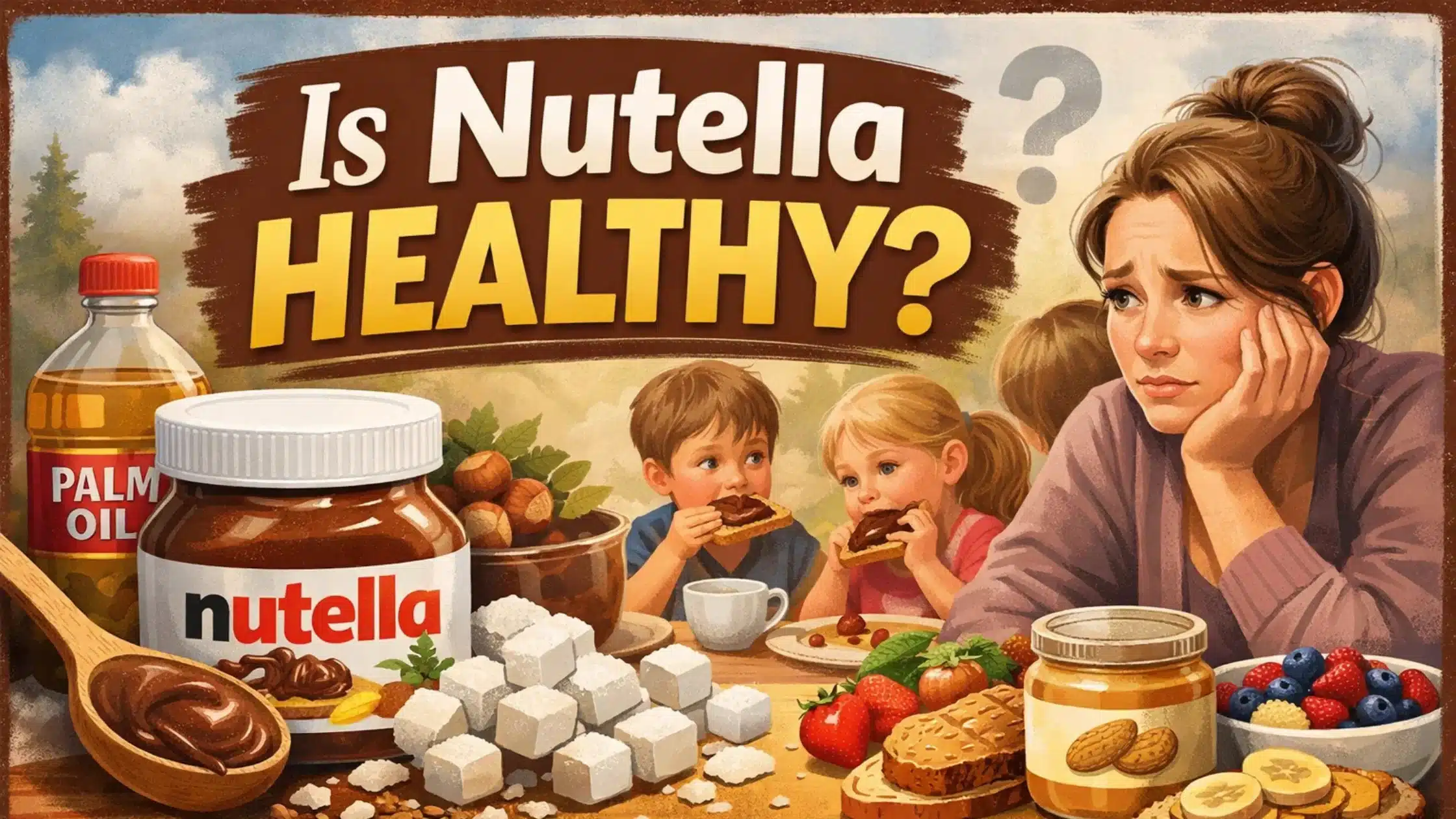
No, Nutella is not healthy. I know, I know—that’s not what you wanted to hear, especially if you’ve been spreading it on your kids’ toast every morning thinking you’re doing okay. But after doing my homework and really looking at what’s in that jar, I realized I’d been fooled by clever marketing.
Nutella is basically chocolate frosting in a jar. With sugar as the very first ingredient and over half the jar being sugar and palm oil combined, it has more sugar than most candy bars. I was shocked when I first discovered this, especially since I’d been giving it to my kids for breakfast!
Table of Contents
What’s Really Inside That Jar?
When I finally turned that Nutella jar around and actually read the label—like really read it—I couldn’t believe what I was seeing. You know how they show all those hazelnuts on the packaging? Well, hazelnuts are only the THIRD ingredient. Sugar comes first, then palm oil, and then hazelnuts make up just 13% of the whole thing.
Here’s what you’re actually getting in a 2-tablespoon serving (and let’s be real, most of us use way more than that):
- Calories: 200
- Fat: 11-12g (with 3.5g of the bad saturated kind)
- Sugar: 21g (that’s more than 5 teaspoons!)
- Protein: Only 2g
- Fiber: Less than 1g
When I learned that 21 grams of sugar is almost the entire daily limit recommended for women (25g), I nearly fell off my chair. One serving of Nutella and you’re basically done with sugar for the day—but who stops at one serving?
How I Got Tricked by the Marketing (And You Probably Did Too)
Can we talk about how brilliant Nutella’s marketing is? I mean, the jars have pictures of hazelnuts everywhere. The commercials show happy families eating it on whole wheat toast with fresh strawberries. It’s positioned right there in the breakfast aisle alongside peanut butter and jam.
I genuinely thought I was making a decent choice for my kids’ breakfast. Hazelnuts are healthy, right? Cocoa has antioxidants, doesn’t it? So chocolate-hazelnut spread must be… okay?
Wrong. So wrong. The tiny amount of hazelnuts can’t make up for the mountain of sugar. It’s like putting a few blueberries on a piece of cake and calling it health food. I felt pretty silly once I realized this, but also a bit angry that I’d been misled.
Is Nutella Healthier Than Peanut Butter?
This was one of my biggest questions when I started investigating. My kids would ask for Nutella instead of peanut butter, and I’d think, “Well, it’s basically the same thing, right?”
Absolutely not.Natural peanut butter is miles ahead of Nutella:
- Way more protein (7-8g compared to Nutella’s measly 2g)
- Good fats from actual peanuts, not processed palm oil
- Almost no sugar in natural varieties (maybe 1-2g) versus Nutella’s crazy 21g
- More fiber to keep kids full
- Actual vitamins and minerals like vitamin E and magnesium
Even the regular Jif or Skippy with added sugar and oil beats Nutella hands down. The protein in peanut butter actually keeps my kids satisfied until lunch, while Nutella had them asking for snacks an hour later.
I switched our household to natural almond butter and regular peanut butter, and honestly? My kids adjusted within a week. They don’t even ask for Nutella anymore.
Is Nutella Healthier Than Chocolate? (Depends on the Chocolate)
My daughter asked me this once, and it made me think. If Nutella is basically chocolate, why not just have chocolate?
Here’s what I figured out:
Compared to regular milk chocolate: They’re pretty much the same—tons of sugar, not much nutrition. Maybe Nutella is slightly better because of those few hazelnuts, but we’re splitting hairs here.
Compared to dark chocolate: Dark chocolate wins, no contest. Good dark chocolate (the 70% or higher stuff) has:
- Way less sugar (around 6-8g versus Nutella’s 21g)
- Real antioxidants that are actually good for you
- Minerals like iron and magnesium
- Actual health benefits
I’d rather give my kids a small square of quality dark chocolate than a serving of Nutella any day.
The Palm Oil Thing That Nobody Warned Me About
Besides the sugar overload, there’s palm oil—which makes up about 20% of Nutella. I didn’t even think about this until I started reading more about ingredients.
Palm oil is high in saturated fat, which isn’t great for heart health. It’s not the worst fat out there, but it’s definitely not the healthy kind you find in nuts, avocados, or olive oil.
Plus—and this really bothered me as someone who cares about the planet—palm oil production is destroying rainforests. Orangutans and other animals are losing their homes because of it. Yes, Nutella’s maker says they use “sustainable” palm oil, but the whole industry is still pretty problematic.
Can You Make a Healthier Version? (Yes, and It’s Easier Than You Think!)
Once I realized Nutella wasn’t the breakfast solution I thought it was, I started looking for alternatives. Here’s what actually works:
Making it yourself: This is my favorite option now. I make a batch every couple of weeks, and it’s honestly so much better:
- Roasted hazelnuts (the MAIN ingredient this time!)
- Good quality dark chocolate or cocoa powder
- Just a bit of honey or maple syrup
- Tiny pinch of salt
My homemade version has about 60% less sugar than store-bought Nutella, and my kids actually prefer it. Plus, I know exactly what’s in it.
Better store brands: If you don’t want to make your own, there are options:
- Nocciolata: Organic ingredients, less sugar
- Justin’s Chocolate Hazelnut Butter: More nuts, less sugar
- Artisana Organics: Minimal sweeteners
These still aren’t health foods—let’s be clear—but they’re WAY better than regular Nutella. Less sugar, better ingredients, more actual nuts.
When Is It Okay to Have Nutella?
Look, I’m not the food police. I’m not saying ban Nutella forever or you’re a terrible parent. Life is short, and sometimes you just want the dang chocolate spread. Here’s how I handle it now:
Treat it like dessert: This is the big one. Nutella doesn’t belong at breakfast. It goes in the same category as cookies and ice cream—occasional treats.
Actually measure it: I used to just spread it on with abandon. Now if we’re having it, I measure out the 2 tablespoons. It’s less than you think, but it’s the actual serving size.
Make it special: We save Nutella for Saturday morning pancakes or special occasions. It’s not an everyday thing, and honestly, my kids appreciate it more now.
Serve it with real food: If we’re having Nutella, it goes with whole grain bread or fruit. At least there’s some nutrition happening.
What Happened When I Stopped Buying Nutella Regularly
I’m not going to lie—my kids weren’t thrilled at first when I explained we were switching to other spreads. But here’s what I noticed after about a month:
More stable energy: No more mid-morning crashes and whining for snacks. Breakfast with real nut butter or eggs kept them going until lunch.
Fewer sugar cravings: Once we cut back on the sugar bomb that is Nutella, the kids stopped asking for sweet stuff constantly.
Better attitudes: This might sound dramatic, but the sugar highs and crashes were affecting their moods. More stable blood sugar meant more stable kids.
I felt less guilty: I stopped having that nagging feeling that I was setting them up for unhealthy habits.
The Real Health Problems I Learned About
After researching this topic way too much (hello, mom guilt), here’s what regular Nutella consumption can lead to:
Weight issues: At 200 calories per serving with basically no nutrition, it’s just empty calories. And who actually stops at 2 tablespoons?
Blood sugar roller coaster: That massive sugar hit spikes blood glucose, then crashes it. Over time, this pattern can lead to insulin problems and diabetes risk.
Cavity city: Our dentist mentioned that sugar is terrible for teeth. With Nutella’s sugar content, you’re basically bathing your kids’ teeth in the stuff cavities love.
Missing out on real nutrition: When Nutella replaces eggs, Greek yogurt, or natural nut butter at breakfast, kids miss out on protein, vitamins, and minerals they actually need.
What I Feed My Kids Instead (Real Breakfast Ideas)
Here’s what actually works in our house now:
- Natural nut butters on whole grain toast (sometimes with sliced banana on top)
- Greek yogurt with berries and a drizzle of honey
- Scrambled eggs with cheese and avocado
- Oatmeal with cinnamon, nuts, and a bit of maple syrup
- Whole grain cereal with milk and fresh fruit
These options keep my kids full, give them actual nutrition, and don’t cause the sugar crashes that made mornings miserable.
How Nutella Compares to Other Spreads
Since I’ve gone down this rabbit hole, I’ve compared a lot of spreads:
Jam: Also very sugary, but at least it’s made from fruit. Still not great for everyday, but slightly better than Nutella.
Honey: High in sugar but has some antioxidants and antibacterial properties. Better than Nutella in small amounts.
Cream cheese: Higher in fat and calories but way less sugar. Provides some protein and calcium. Not amazing, but not terrible.
Nut butters: The clear winners. Real nutrition, keeps kids full, provides healthy fats and protein.
The pattern is obvious: actual nut-based spreads are healthy. Sugar-based spreads like Nutella are treats.
My Biggest Takeaway After All This Research
I used to keep Nutella in the pantry and reach for it constantly—breakfast toast, afternoon snacks, sometimes just eaten with a spoon (don’t judge me). I honestly thought the hazelnut content made it an okay choice.
Now I understand it’s candy in a jar with brilliant marketing. The hazelnuts are basically just there for the label.
We still have Nutella occasionally—I made crepes with it for my daughter’s birthday last month. But it’s not a breakfast food anymore. It’s not an everyday thing. And I don’t kid myself about what it is.
Has this changed things for my family? Absolutely. My kids are eating better, I feel better about what I’m feeding them, and nobody’s throwing tantrums about being hungry an hour after breakfast anymore.
If you love Nutella, I get it. It tastes amazing. Just stop pretending it’s healthy, stop giving it to your kids every morning, and treat it like the dessert it actually is.
The Bottom Line: What I Wish Someone Had Told Me
Is Nutella healthy? No. It’s over 50% sugar and palm oil with barely any hazelnuts. It’s marketed brilliantly, but it’s basically frosting.
Should you never eat it again? Of course not. But be honest about what it is. Don’t serve it at breakfast like it’s nourishing food. Don’t give it to your kids daily. Measure your portions. Save it for special treats.
I wasted years thinking I was making decent choices by choosing Nutella. Now I know better, and I’m sharing this so maybe you don’t have to learn the hard way too.
Real hazelnuts are incredibly nutritious—full of vitamin E, healthy fats, and minerals. A handful of actual hazelnuts as a snack? Great choice. But mixing a tiny bit of hazelnuts with a mountain of sugar and calling it breakfast food? That’s just marketing genius that fooled a lot of us moms.
Read the labels. Ask questions. Don’t trust packaging that shows pretty pictures of healthy ingredients when those ingredients are barely in the product.
Your family’s health matters, and now you know the truth about Nutella.
Frequently Asked Questions
Is Nutella healthier than peanut butter?
No way. Peanut butter is so much healthier than Nutella it’s not even a fair comparison. Real peanut butter has 7-8 grams of protein per serving while Nutella only has 2 grams. The big difference is sugar—natural peanut butter has maybe 1-2 grams while Nutella packs in 21 grams (that’s over 5 teaspoons!). Peanut butter also has fiber and good fats that keep kids full, while Nutella is mostly just sugar and palm oil. Even the regular Skippy or Jif brands beat Nutella nutrition-wise.
Is Nutella healthier than chocolate?
It really depends on what kind of chocolate you’re comparing it to. Nutella and milk chocolate are basically the same—both loaded with sugar and not offering much nutrition. But if you’re talking about dark chocolate (the 70% cacao or higher kind), then dark chocolate is definitely healthier. Good dark chocolate has way less sugar (maybe 6-8 grams versus Nutella’s 21), plus it has real antioxidants and minerals that are actually good for you. I’d rather give my kids a small piece of quality dark chocolate than Nutella.
Is Nutella healthy for you?
Honestly? No, Nutella is not healthy. I used to think it was okay because of the hazelnuts on the label, but sugar is literally the first ingredient. One serving has 21 grams of sugar—that’s almost your entire daily limit right there. It doesn’t have the protein or fiber that keeps you full, and it’ll spike your blood sugar and then crash it. I learned this the hard way watching my kids get hungry and cranky an hour after eating it. Nutella is basically a dessert, not a health food, no matter how they market it.
Is peanut butter healthier than Nutella?
Yes, absolutely! Peanut butter is way healthier. When I compared them side by side, the difference was shocking. Peanut butter has protein that keeps my kids full until lunch, healthy fats instead of palm oil, and hardly any sugar compared to Nutella’s massive amount. Plus it has fiber and vitamins like vitamin E. Since switching from Nutella to natural peanut butter for breakfast, I’ve noticed my kids have more energy and don’t crash mid-morning asking for snacks. Peanut butter is actual food; Nutella is basically candy.
How healthy is Nutella?
Nutella isn’t healthy at all. I hate to be the bearer of bad news, but once I actually read the label, I realized it’s more than half sugar and palm oil by weight. The hazelnuts that they show all over the jar? Only about 13% of what’s actually inside. One serving gives you 21 grams of sugar (over 5 teaspoons), barely any protein or fiber, and none of the nutrients you’d get from real nut butter. Using it every day can lead to weight gain, blood sugar problems, and means you’re missing out on actual nutritious breakfast options. I learned to treat it like ice cream—an occasional treat, not everyday food.
Is there a healthy version of Nutella?
Store-bought Nutella isn’t healthy, but you can definitely make a better version at home! I started making my own chocolate hazelnut spread using mostly roasted hazelnuts (not just 13%!), some dark chocolate or cocoa powder, and just a tiny bit of honey. It has about 60% less sugar than regular Nutella and actually tastes amazing. My kids love it even more than the store version. If you don’t want to make your own, brands like Nocciolata, Justin’s Chocolate Hazelnut Butter, or Artisana Organics are better options with less sugar and more actual nuts. They’re still treats though, not health foods.
Can I eat Nutella every day?
I wouldn’t recommend it. When I was giving Nutella to my kids every morning, they were getting 21 grams of added sugar before they even left for school. That’s almost the entire daily limit for women (25g) and over half for men (36g). Eating it daily can lead to weight gain, blood sugar issues, and possibly diabetes down the road. Plus it was making my kids hungrier and crankier by mid-morning. Now we save Nutella for special occasions—maybe once a month for Saturday pancakes. The everyday breakfast spot goes to real nut butter, eggs, or Greek yogurt that actually nourishes them.
What are healthier alternatives to Nutella for breakfast?
After ditching Nutella as a breakfast staple, here’s what actually works in my house: natural almond or peanut butter on whole grain toast (my kids’ favorite), Greek yogurt with fresh berries and a drizzle of real honey, scrambled eggs with avocado, oatmeal with cinnamon and nuts, or whole grain cereal with milk and fruit. These options keep my kids full and energized until lunch instead of crashing an hour later. If you really want that chocolate-hazelnut flavor, make your own spread with real hazelnuts and way less sugar—it’s easier than you think and so much better for your family.

Leave a Reply