
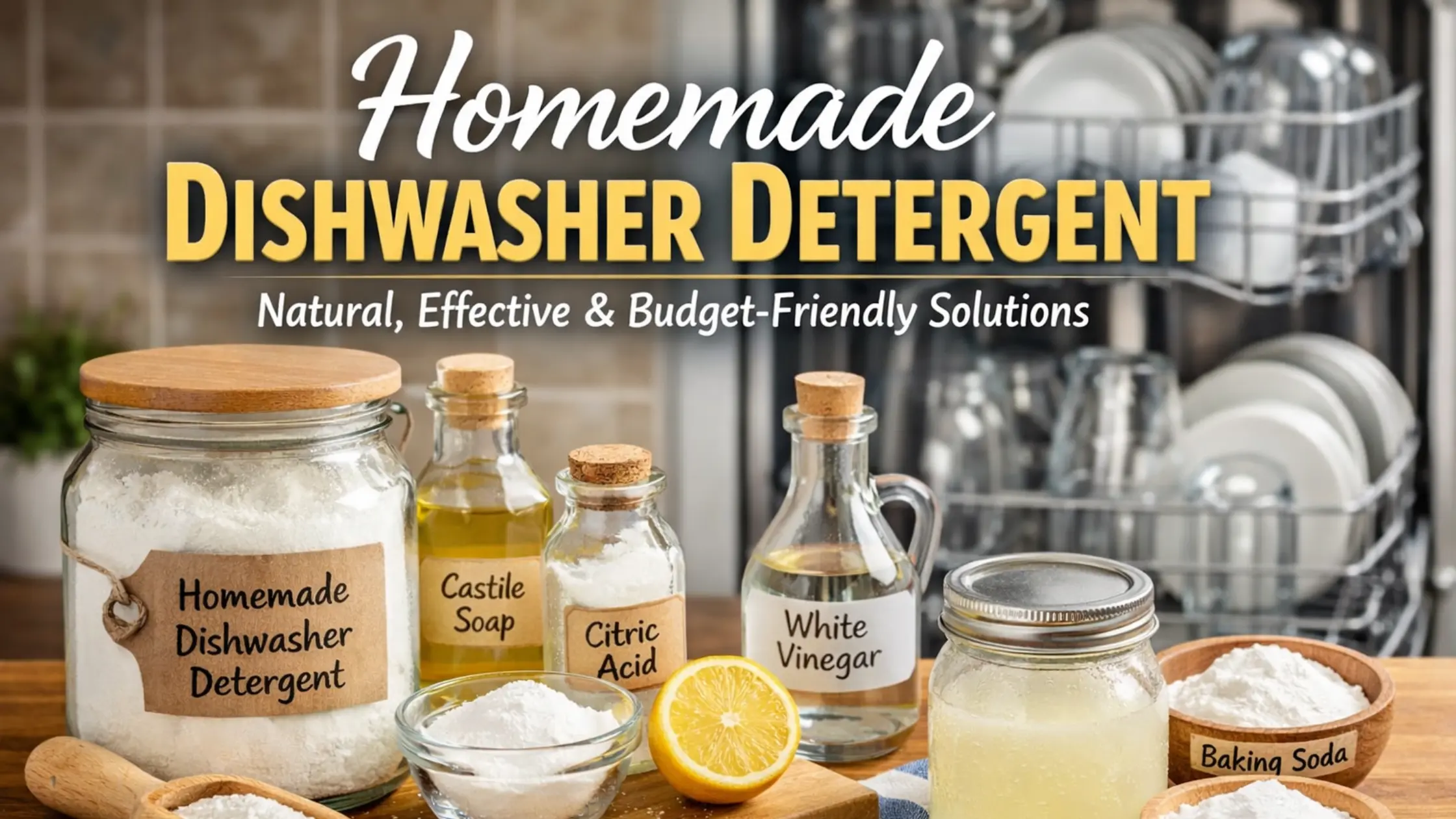
If you’ve ever opened your dishwasher and caught that sharp, chemical smell—or wondered why your “eco” detergent still leaves residue—you’re not alone. I reached that point a few years ago, standing in my kitchen, holding yet another plastic bottle and asking myself a simple question: Can I do this better at home?
That curiosity is what pushed me into the world of homemade dishwasher detergent. I didn’t just try one recipe—I tested powders, gels, tablets, and every variation in between. Some failed spectacularly (hello, cloudy glasses), while others worked so well I never went back to store-bought options.
This guide is built from that real experience. Whether you’re a complete beginner or someone who’s already experimenting, this post will walk you through everything you need to know—honestly, practically, and without the fluff.
Table of Contents
Why People Are Switching to Homemade Dishwasher Detergent
Search intent around homemade dishwasher detergent usually falls into three buckets:
- Health & safety concerns (especially for kids and pets)
- Cost savings over time
- Eco-friendly living with fewer chemicals and plastic bottles
I personally started for all three reasons—but stayed because it actually worked.
Commercial dishwasher detergents often contain:
- Synthetic fragrances
- Chlorine-based bleaches
- Harsh surfactants
While they clean well, they can also:
- Leave chemical residue on dishes
- Irritate sensitive skin
- Build up inside your dishwasher over time
Switching to a homemade version gave me full control over ingredients—and surprisingly, better long-term results.
Does Homemade Dishwasher Detergent Really Work?
This is the biggest skepticism I see in comments and forums—and it’s a fair one.
The short answer: Yes, if you understand how dishwashers actually clean.
Your dishwasher relies on:
- Hot water
- Water pressure
- Alkaline cleaning agents
- Rinse aids
Most failures happen when people skip one of these elements. Once I understood that, my success rate went way up.
The key is choosing the right recipe for your water type (hard vs. soft) and using it correctly.
Understanding the Ingredients (What Each One Actually Does)
Before jumping into recipes, it’s important to know why these ingredients work.
Baking Soda (Sodium Bicarbonate)
- Mild abrasive
- Neutralizes odors
- Helps lift food residue
Washing Soda (Sodium Carbonate)
- Stronger alkaline cleaner
- Cuts grease effectively
- Essential for tough, baked-on food
(This is not the same as baking soda.)
Citric Acid
- Fights hard water stains
- Prevents cloudy glassware
- Boosts cleaning power
Liquid Castile Soap
- Plant-based surfactant
- Helps emulsify grease
- Ideal for homemade liquid dishwasher detergent recipes
White Vinegar (Used Separately)
- Acts as a rinse aid
- Prevents mineral buildup
Keeps dishwasher interiors clean
My Go-To Powder Recipe (Best for Beginners)
This is where I recommend starting. It’s stable, inexpensive, and forgiving.
Simple Powder Dishwasher Detergent Recipe
Ingredients
- 1 cup washing soda
- 1 cup baking soda
- ½ cup citric acid
Instructions
- Mix all ingredients thoroughly in a bowl
- Store in an airtight container
- Use 1 tablespoon per load
This basic homemade dishwasher detergent cleaned 90% of my loads perfectly—without residue or odor.
When It Works Best
- Normal daily loads
- Moderately hard water
Well-maintained dishwashers
Homemade Liquid Dishwasher Detergent (Gel Version)
If you prefer gels over powders, this is where homemade liquid dishwasher detergent comes in. I’ll be honest: liquid versions are trickier—but not impossible.
Homemade Liquid Dishwashing Detergent Recipe
Ingredients
- 1 cup water
- ¼ cup liquid Castile soap
- 2 tablespoons washing soda
- 1 tablespoon citric acid
Instructions
- Heat water (do not boil)
- Slowly whisk in washing soda
- Let cool slightly
- Add Castile soap and citric acid
- Store in a glass jar
Use 2 tablespoons per load.
This homemade liquid dishwashing detergent works well for lightly soiled dishes and is gentle enough for sensitive households.
Important Tip
Never mix vinegar directly into the detergent—it cancels out the cleaning action. Use vinegar only in the rinse compartment.
Liquid Dishwasher Detergent Homemade: What to Expect
Many people searching for liquid dishwasher detergent homemade expect the same thickness and performance as commercial gels. That’s not realistic—and that’s okay.
Here’s what I noticed:
- Slightly thinner consistency
- Less foam (which is good for dishwashers)
- Cleaner smell, no chemical fragrance
Once expectations are adjusted, satisfaction goes way up.
Homemade Dish Detergent for Dishwasher vs. Hand Washing
This is a common beginner mistake, so let’s be very clear:
🚫 Dish soap is NOT dishwasher detergent
A proper homemade dish detergent for dishwasher:
- Produces low suds
- Is alkaline-based
- Designed for high heat
Using hand soap—even homemade—can flood your kitchen with bubbles.
How to Boost Performance (My Personal Tweaks)
After months of testing, here’s what made the biggest difference:
1. Always Use a Rinse Aid
White vinegar in the rinse compartment = spot-free dishes.
2. Pre-Rinse Only When Necessary
Heavy starch or cheese? Quick rinse helps.
3. Clean Your Dishwasher Monthly
Run an empty cycle with vinegar and baking soda.
4. Adjust for Hard Water
Add extra citric acid if your glasses look cloudy.
Cost Breakdown: Is It Actually Cheaper?
Absolutely.
Here’s my real comparison (approximate):
| Type | Cost per Load |
| Store-Bought Pods | $0.25–$0.40 |
| Homemade Powder | $0.03–$0.05 |
| Homemade Liquid | $0.05–$0.07 |
Over a year, that’s hundreds of dollars saved for a family household.
Environmental Benefits You’ll Actually Notice
Switching to homemade options reduced:
- Plastic waste
- Chemical runoff
- Packaging clutter under my sink
It’s one of the easiest eco-friendly swaps I’ve made—and one I’ve stuck with long-term.
Common Mistakes I Made (So You Don’t Have To)
- Using too much detergent
- Skipping rinse aid
- Mixing vinegar into detergent
- Expecting instant results with hard water
Once corrected, results improved dramatically.
Is Homemade Dishwasher Detergent Safe for All Machines?
In my experience, yes—when used properly.
Compatible with:
- HE dishwashers
- Stainless steel tubs
- Septic systems
Final Thoughts: Is It Worth It?
After years of testing, I can confidently say: Yes.
Homemade dishwasher detergent isn’t about perfection—it’s about control, transparency, and long-term benefits. Once you find the recipe that works for your home, it becomes second nature.
Frequently Asked Questions
What is the best homemade dishwasher detergent recipe for beginners?
A simple powder made with washing soda, baking soda, and citric acid is the easiest and most reliable homemade dishwasher detergent for beginners.
Can I use homemade liquid dishwasher detergent every day?
Yes, homemade liquid dishwasher detergent is safe for daily use, especially for lightly soiled dishes. Just make sure to use vinegar as a rinse aid.
Why does my homemade liquid dishwashing detergent leave residue?
Residue is usually caused by hard water or too much detergent. Adjust the citric acid and reduce the quantity used per load.
Is liquid dishwasher detergent homemade better than powder?
Liquid dishwasher detergent homemade works well for light loads, but powders generally perform better on heavy grease and baked-on food.
Can homemade dish detergent for dishwasher damage my machine?
No, homemade dish detergent for dishwasher is safe when low-sudsing ingredients are used and vinegar is kept separate from the detergent.
How long does homemade dishwasher liquid detergent last?
Homemade dishwasher liquid detergent typically lasts 2–3 weeks when stored in a sealed glass container in a cool place.
Does homemade dishwasher detergent work with hard water?
Yes, but hard water requires more citric acid or a vinegar rinse to prevent cloudy dishes.
Can I switch between homemade powder and liquid versions?
Absolutely. Many people use powder for heavy loads and homemade liquid dishwasher detergent for everyday washing.

Leave a Reply