Fun Crafts ThunderOnTheGulf is a creative coastal experience inspired by the natural beauty of the Gulf Coast, blending hands-on artistic activities with relaxed festival-style energy. Often associated with Gulf Coast celebrations, this concept focuses on turning beachside creativity into accessible, family-friendly crafts that anyone can enjoy—regardless of age or artistic background.
The experience is commonly described as an immersive creative space where shells, driftwood, sand, and ocean-inspired materials form the basis of memorable keepsakes. During peak festival seasons, visitors can explore a variety of casual craft activities, from simple sand art for children to more advanced resin-based projects for experienced makers. What sets this coastal crafting experience apart is its authentic connection to the Gulf environment, allowing each finished piece to reflect the region’s unique coastal character.
Table of Contents
What Makes Fun Crafts ThunderOnTheGulf Special?
Unlike typical craft fairs or generic hobby workshops, Fun Crafts ThunderOnTheGulf combines the excitement of a coastal festival with purposeful creative programming. The experience is built around three core pillars:
Festival Integration: Every craft activity connects to the broader coastal festival experience, incorporating themes of aviation, marine life, speed, and coastal culture that define Gulf Coast events.
Accessibility for All: Whether you’re a 3-year-old decorating your first seashell or an experienced crafter tackling complex resin art, the creative zone welcomes every skill level with appropriate activities and patient instruction.
Coastal Authenticity: Materials, themes, and inspiration draw directly from the Gulf Coast environment—the shells beneath your feet, the driftwood shaped by waves, the endless azure horizons that define the region.
“The beauty of festival crafting is that it transforms a vacation moment into a lasting memory. That painted shell becomes more than decoration—it’s a tangible piece of an experience.” — Coastal Craft Facilitator
Popular On-Site Craft Activities at the Festival
Most activities at coastal festivals are free with admission and operate during standard daytime hours. Here’s what you can typically expect:
| Activity Type | Skill Level | Age Range | Average Time | Materials Used |
| Shell Decorating & Sand Art | Beginner | 3+ | 20-30 minutes | Shells, colored sand, small containers |
| Jewelry Creation | Beginner-Intermediate | 7+ | 30-45 minutes | Beads, wire, coastal elements |
| Miniature Vessel Building | Intermediate-Advanced | 7+ (adult supervision) | 45-60 minutes | Craft sticks, sails, paint |
| Ocean Resin & Clay Molding | Advanced | 12+ (registration required) | 60-90 minutes | Resin, pigments, molds, natural materials |
| Eco-Friendly Projects | All levels | All ages | 20-60 minutes | Recycled materials, sustainable supplies |
Shell Decorating & Sand Art
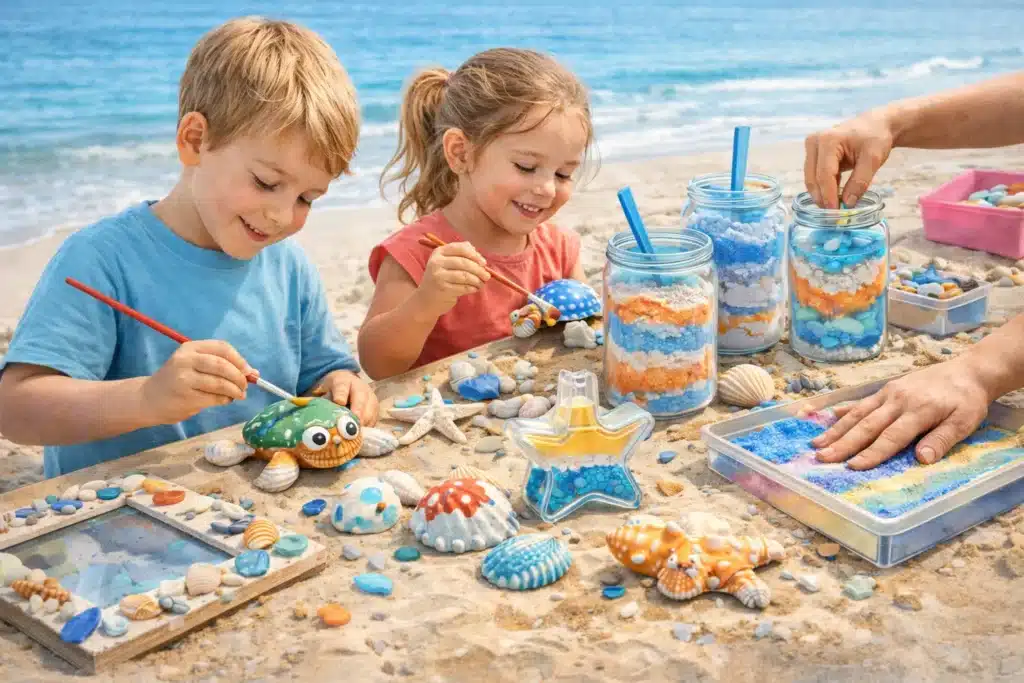
The most accessible entry point for younger children and first-time crafters, these tactile projects allow participants to work with smooth shells and vibrant colored sand. Kids ages 3 and up can create personalized shell creatures, decorate picture frames, or layer sand in clear containers to create striped masterpieces.
The simplicity doesn’t diminish the satisfaction—there’s something genuinely meditative about sorting shells by size, selecting perfect color combinations, and watching your design take shape. Parents often find themselves as engaged as their children, rediscovering the simple pleasure of hands-on creativity.
Jewelry Creation
Using beads and coastal elements, participants craft personal keepsakes that extend the festival experience well beyond the event weekend. Wire-wrapping techniques allow crafters to transform sea glass fragments into pendants, while stringing activities create bracelets adorned with shell beads and nautical charms.
These wearable creations serve dual purposes: they’re both fashionable accessories and tangible reminders of creative time spent along the Gulf Coast. Many festival-goers make matching pieces with family members, creating shared mementos of their experience together.
Miniature Vessel Building
Reflecting the Gulf Coast’s connection to boats and water sports, these more advanced workshops guide participants through building small boats or aircraft using craft sticks, sails, and decorative elements. The activity appeals particularly to children ages 7 and up, though adult participation is encouraged for younger builders.
The engineering aspect adds educational value—crafters learn basic principles of buoyancy, balance, and construction while creating something they can actually test in water (many participants head straight to the shore to see if their creations float!).
Ocean Resin & Clay Molding
These specialized sessions often require advance registration due to high demand and the technical nature of the materials. Participants ages 12 and up learn to work with resin, mixing pigments to create stunning ocean-wave effects, beach scenes, or translucent pieces embedded with sand and shells.
The resin curing process means these projects can’t be taken home immediately—most facilitators provide pickup times later in the day or offer shipping options for out-of-town visitors. The wait is worth it: resin pieces have a professional, gallery-quality appearance that surprises first-time creators.
Eco-Friendly Projects
Sustainability-focused activities teach participants to create art from recycled or sustainable materials. Foam-mask creation using paper-animal techniques, upcycled bottle crafts, and beach cleanup art (transforming collected trash into awareness pieces) all fall under this category.
These stations emphasize environmental stewardship alongside creativity, helping festival attendees understand their role in protecting the coastal ecosystems that make events like Thunder on the Gulf possible.
DIY “Thunder On The Gulf” Inspired Crafts You Can Make at Home
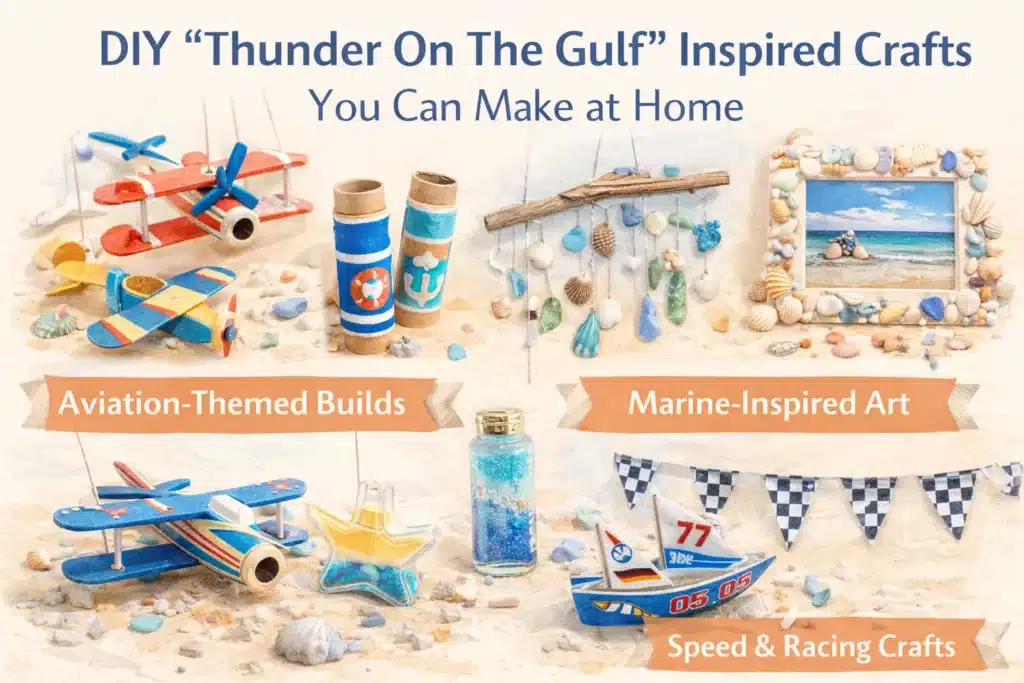
If you want to recreate the festival vibe at home, or if you’re preparing for an upcoming visit, these themed projects capture the spirit of coastal creativity:
Aviation-Themed Builds
String Puppet Planes: Create simple aircraft using craft sticks, string, and cardboard. Paint them in vibrant colors reminiscent of the aerobatic planes featured at coastal air shows. These make excellent mobile decorations that capture movement and flight.
Cardboard Tube Telescopes: Fashion binoculars or telescopes from cardboard tubes (paper towel or toilet paper rolls work perfectly). Decorate with nautical themes and use them for “spotting” activities during your festival visit or backyard adventures.
Marine-Inspired Art
Driftwood Wind Chimes: Collect driftwood pieces (or purchase them from craft stores) and combine them with shells, sea glass, and fishing line to create musical decorations. The gentle sound evokes ocean breezes and coastal living.
Seashell Photo Frames: Transform plain wooden frames into coastal keepsakes by gluing an assortment of shells around the border. These make perfect displays for photos taken at the festival or beach.
Ocean-in-a-Bottle: Layer different shades of blue sand or create a water-oil-glitter mixture in clear bottles to simulate ocean waves. These mesmerizing creations appeal to all ages and require minimal materials.
Speed & Racing Crafts
Miniature Race Boats: Use foam trays, craft sticks, and fabric scraps to build small racing vessels. Paint racing numbers and sponsor logos (real or imagined) to mimic the powerboats featured at coastal racing events.
Checkered Flag Bunting: Cut triangular flags from black and white fabric or paper, arrange in checkered patterns, and string them together for festival-themed decoration.
Family & Kids-Friendly Craft Experiences: What to Expect
Age-Specific Programming
Coastal craft experiences thoughtfully segment activities to match developmental stages:
Ages 3-6 (Preschool)
- Large, easy-to-handle materials
- Simple gluing and painting
- Immediate gratification projects (finished within 20 minutes)
- Heavy supervision with one facilitator per 4-5 children
- Focus on sensory exploration over finished product
Ages 7-11 (Elementary)
- Introduction to basic techniques (knotting, simple weaving, layering)
- Projects requiring 30-45 minutes
- Opportunities for personalization and choice
- Balance of guidance and independent work
- Results they’ll proudly display
Ages 12+ (Teens and Adults)
- Complex techniques including resin work and advanced assembly
- Multi-step processes requiring patience
- Professional-quality outcomes
- Workshop-style instruction with demonstrations
- Peer interaction and collaborative problem-solving
Safety and Supervision Standards
Parents can participate alongside children or allow kids to work independently in supervised creative zones. All stations maintain strict safety protocols:
- Age-appropriate tools exclusively (safety scissors, plastic needles, cool-temperature glue guns for younger children)
- Non-toxic, water-based paints and adhesives throughout
- Protective coverings for clothing (aprons available)
- First aid-certified staff on site
- Clear allergen labeling for materials (important for shell allergies or sensitivities)
- Hand-washing stations readily accessible
Educational Integration
Festival crafting isn’t just about keeping kids busy—it’s about fostering genuine learning:
Marine Biology: Shell identification activities teach children about mollusks, crustaceans, and coastal ecosystems. Many stations include laminated identification guides showing common Gulf Coast species.
Environmental Science: Eco-craft activities discuss ocean pollution, the importance of coastal preservation, and how individual actions impact fragile beach environments.
Physics and Engineering: Boat-building workshops explore buoyancy, balance, and basic hydrodynamics. Children test theories immediately by floating their creations.
Art History and Culture: Facilitators often share information about traditional coastal crafts, the cultural significance of maritime art, and how different cultures have used similar materials throughout history.
Why Coastal Crafts Thrive at Gulf Coast Festivals
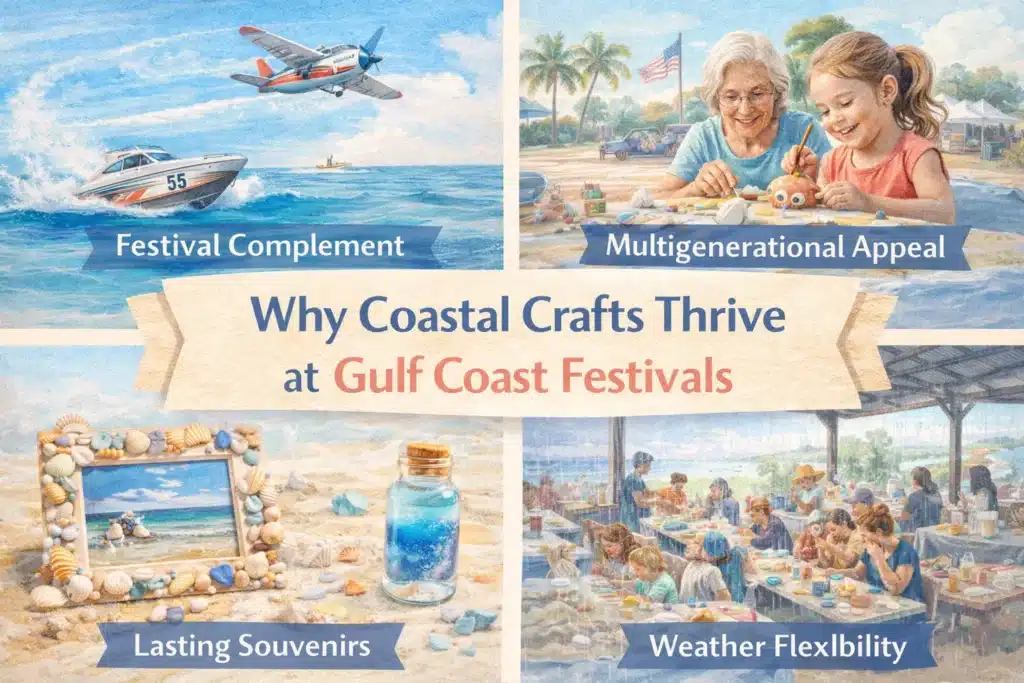
The Perfect Festival Complement
Gulf Coast events are known for high-octane excitement—powerboat racing, aerobatic flight demonstrations, and the general energy of major coastal gatherings. Craft zones provide essential balance, offering calm refuges where families can recharge while still feeling connected to the festival experience.
This pairing of excitement and calm creates rhythm to the day: watch thrilling races, then decompress at a craft table; see stunning aerial maneuvers, then create your own aviation-themed art. The variety prevents sensory overload and keeps the experience enjoyable for all family members, regardless of their tolerance for crowds and noise.
Multigenerational Appeal
Few festival activities genuinely engage everyone from toddlers to grandparents, but coastal crafting succeeds because it:
- Requires no special knowledge or athletic ability
- Proceeds at whatever pace suits the participant
- Produces tangible results everyone appreciates
- Creates natural opportunities for conversation and bonding
- Accommodates varying energy levels and mobility
Grandparents often report that craft time provides their favorite festival memories—not because they love crafting specifically, but because sitting side-by-side with grandchildren, helping with tricky steps, and admiring finished creations creates intimacy impossible during more chaotic festival activities.
The Souvenir Factor
Festival merchandise has its place, but handmade crafts carry deeper meaning. Consider the difference:
Purchased T-shirt: “I attended a Gulf Coast festival”
Handmade shell-adorned frame holding a festival photo: “I spent a sunny afternoon creating this while my daughter painted shells beside me, and later we found the perfect shell together to place right here in the corner”
The story embedded in handmade items—the process, the people involved, the moment in time—transforms simple crafts into cherished keepsakes.
Weather Flexibility
Gulf Coast weather in late spring is generally gorgeous, but it’s also unpredictable. Brief afternoon showers are common. Craft zones typically offer covered or easily relocated stations, providing festival-goers with weather-independent activities. When rain sends crowds scrambling, the creative area becomes a welcome shelter where the fun continues uninterrupted.
Sustainability and Eco-Conscious Crafting
Natural Material Emphasis
The most sustainable craft material is one that’s already abundant and renewable. Festival craft stations prioritize:
Responsibly Collected Shells: Only empty shells, never occupied. Many festivals partner with local shell collectors who gather materials following strict environmental guidelines, ensuring living creatures aren’t disturbed.
Beach-Cast Driftwood: Wood that’s already been separated from its source and weathered by ocean processes. Collection focuses on pieces well above the tide line that won’t disrupt beach dynamics.
Recycled Sea Glass: Naturally tumbled glass fragments that would otherwise remain as beach litter. Using them in crafts literally removes waste from the coastal environment.
Sustainable Alternatives: When natural materials aren’t practical, festivals opt for recycled paper, reclaimed wood, and other eco-friendly substitutes.
Teaching Conservation Through Creation
Every craft station becomes an opportunity for environmental education. Facilitators naturally weave conservation messages into instruction:
“See how smooth this shell is? That means a creature lived inside it until it died naturally. We never take shells with animals still inside because they need their homes.”
“This driftwood probably started as a tree branch upstream. Rivers carried it to the ocean, waves shaped it smooth, and now we’re giving it new purpose as art. That’s recycling the way nature intended!”
“The microplastics in ocean resin art aren’t decoration—they’re real plastic pollution we’re raising awareness about. Making this piece beautiful helps us think about keeping our real oceans clean.”
These lessons stick because they’re delivered during engaged, hands-on moments rather than as lectures.
Zero-Waste Craft Practices
Progressive festival craft zones implement waste-reduction strategies:
| Practice | Implementation | Impact |
| Scrap Stations | Dedicated tables where excess materials become new projects | Reduces material waste by 40-60% |
| Compostable Supplies | Wooden sticks, natural fiber string, paper-based materials | Diverts non-recyclables from landfills |
| Bulk Adhesives | Shared glue containers rather than individual bottles | Eliminates single-use packaging |
| Take-What-You-Need | Materials distributed in needed quantities, not pre-packaged kits | Prevents over-distribution and waste |
| Donation Programs | Unused materials donated to schools and community centers | Extends material life cycle |
Eco-Craft Specific Activities
Some stations focus explicitly on environmental themes:
Ocean Pollution Art: Participants create awareness pieces using actual beach trash collected during organized cleanups. The contrast between the beautiful art and its disturbing origin (discarded plastic, fishing line, bottle caps) creates powerful commentary.
Seed Paper Crafts: Decorative paper embedded with native coastal plant seeds. After the festival, participants can plant their creations, which biodegrade while sprouting flowers that support local pollinators.
Upcycled Material Challenges: Crafters receive a bag of random recycled materials and challenge themselves to create something beautiful, learning resourcefulness and creative problem-solving.
Insider Tips for Maximum Craft Zone Enjoyment
Timing Your Visit
Early Morning (9:00-10:30 AM)
- Pros: Smallest crowds, coolest temperatures, fresh materials, energetic facilitators
- Cons: You might miss other festival activities during prime morning hours
- Best For: Families with young children who do better before afternoon fatigue sets in
Midday (11:00 AM-2:00 PM)
- Pros: Festival atmosphere at its peak, social energy, good for meeting other crafters
- Cons: Warmest temperatures, longest wait times for popular activities, potential material depletion
- Best For: Adults and teens comfortable with crowds, social crafters
Late Afternoon (3:00-5:30 PM)
- Pros: Cooling temperatures, you’ve already seen main festival attractions, relaxed pace as crowds thin
- Cons: Some popular materials may be depleted, facilitators may be tired, some activities may close early
- Best For: Using crafting as a wind-down activity, second visits to try different projects
What to Bring
Essential Items:
- Sunscreen (even covered areas receive reflected UV)
- Refillable water bottle
- Small hand sanitizer or wipes
- Phone or camera for documenting creations
- Small bag or backpack for carrying finished projects
Nice to Have:
- Portable chair if you prefer not standing
- Reading glasses if you need them for detailed work
- Personal craft tools if you’re particular (small scissors, favorite tweezers)
- Snacks for children who get hungry while crafting
- Battery pack for phone (you’ll take lots of photos)
Skip These:
- Expensive jewelry or watches (adhesives and paint happen)
- White or light-colored clothing
- Large bags that won’t fit under craft tables
- Valuable items you can’t watch while crafting
Strategies for Families
Divide and Conquer: If you have multiple children with different interests, consider splitting up. One parent takes the older kids to advanced activities while the other supervises younger children at simpler stations, then switch.
The Two-Project Rule: Let each child choose two projects—one simple/quick and one more involved. This prevents decision paralysis and overscheduling while ensuring everyone gets variety.
Bring a Fellow Parent: Crafting with another family doubles the fun and provides built-in supervision flexibility. Adults can take turns watching all the kids while others explore the festival.
Photo Documentation: Take pictures at every stage—choosing materials, creating, with the finished product. These process photos often become more treasured than the crafts themselves.
Embrace Imperfection: Your child’s wobbly glued shells or paint outside the lines aren’t flaws—they’re authentic expressions of their creativity at this age and moment.
For Solo Crafters and Adult Enthusiasts
Don’t assume craft zones are just for families with children. Adult crafters find immense value in festival creative experiences:
- No Judgment Space: Unlike the implicit pressure of professional craft workshops, festival settings embrace beginner attempts
- Social Connection: Shared tables facilitate conversation with fellow crafters without forced interaction
- Skill Sampling: Try techniques you’ve been curious about without investing in full supply sets
- Mindful Break: After hours of sensory festival intensity, focused crafting provides meditative restoration
Travel-Friendly Creativity: Create without hauling your entire craft room across the country
Planning for Your Coastal Craft Experience
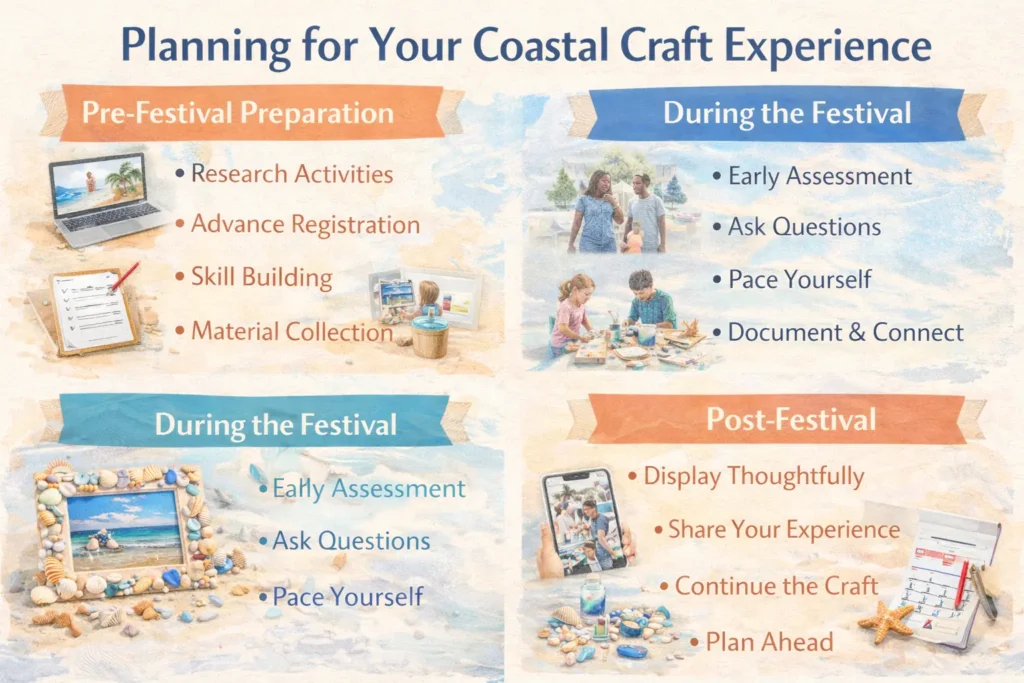
Pre-Festival Preparation
If you’re planning to attend a Gulf Coast festival specifically for the craft experiences, some advance preparation enhances your visit:
Research Activities: Check festival websites or social media for announcements about featured craft activities. Some years emphasize certain themes or bring in special guest instructors.
Advance Registration: If high-demand activities (like resin workshops) offer advance registration, sign up early. These spots fill quickly.
Skill Building: If you want to attempt advanced projects, consider practicing basic techniques beforehand through online tutorials. Arriving with foundational knowledge lets you focus on creating rather than learning.
Material Collection: If the festival welcomes participant-provided materials, spend time before your trip collecting special shells or driftwood. Using materials you personally found adds extra meaning.
During the Festival
Early Assessment: On your first day, walk through the entire craft zone before committing to activities. Note what interests you, what has the longest lines, and what might require return visits.
Ask Questions: Facilitators are there to help. Ask about technique difficulty, time requirements, drying/curing needs, and transportation considerations before starting projects.
Pace Yourself: It’s tempting to try everything, but rushed crafting defeats the purpose. Better to fully enjoy two activities than stress through five.
Document and Connect: Take photos, collect business cards from local artisans, note techniques you want to research further. The festival can inspire ongoing crafting practice at home.
Post-Festival
Display Thoughtfully: Give your creations places of honor in your home. That shell-decorated frame deserves wall space, not drawer obscurity.
Share Your Experience: Post photos online, write reviews, tag the festival. This helps others plan their visits and supports the craft programming you enjoyed.
Continue the Craft: Use skills learned at the festival as springboards for home crafting. That resin technique works just as well with your local beach sand.
Plan Ahead: Mark calendars for next year’s festival dates. Early planning allows for better travel arrangements and accommodation options.
Conclusion: Where Creativity Meets Coastal Culture
Fun Crafts ThunderOnTheGulf represents something larger than craft tables at a festival—it’s where the Gulf Coast’s natural beauty, rich cultural traditions, and spirit of creative expression converge. In an era where experiences are increasingly passive and digital, these hands-on activities offer something genuinely different: the tactile satisfaction of working with natural materials, the pride of creating something with your own hands, and the connection that comes from shared creative experiences.
The genius of coastal festival crafting lies in its accessibility. You don’t need artistic talent, prior experience, or expensive supplies. You simply need curiosity and a willingness to try something new. Whether you’re a parent seeking quality time with children, a creative soul looking for inspiration, or someone who just wants to slow down and make something beautiful while surrounded by coastal atmosphere, the craft zone welcomes you.
These aren’t just time-fillers between main festival events—they’re experiences that often become the most treasured festival memories. Years later, families don’t necessarily remember specific race results or performance details, but they vividly recall the afternoon spent creating together, the joy on a child’s face when they completed their first real project, or the unexpected conversation with a stranger at a shared craft table that turned into a lasting connection.
As you plan your Gulf Coast experience, make space for creativity alongside the excitement. Let yourself explore materials, experiment with techniques, and discover capabilities you didn’t know you had. Whether you leave with a simple painted shell or an elaborate resin masterpiece, you’ll carry something more valuable than a souvenir—you’ll carry a memory of time well spent, a moment of creative flow, and perhaps a newfound appreciation for the intersection of art, nature, and community that defines coastal culture.
The Gulf Coast has always inspired creativity—its stunning vistas, abundant natural materials, and laid-back lifestyle have drawn artists and makers for generations. Fun Crafts ThunderOnTheGulf simply provides the structure and opportunity for everyone, regardless of skill level, to participate in that creative tradition. It democratizes coastal artistry, making it accessible to the three-year-old decorating their first shell and the retiree finally trying that resin technique they’ve been curious about.
So when you find yourself at a Gulf Coast festival, surrounded by the energy and excitement of celebration, take time to visit the creative zone. Sit down at a craft table, run your fingers over smooth shells, feel the texture of weathered driftwood, watch the way sand shifts and layers, and let yourself create. The result might surprise you—not because you’ve made something perfect, but because you’ve given yourself permission to play, experiment, and connect with the coastal environment in a deeply personal way.
That’s the true gift of coastal festival crafting: it transforms festival-goers from spectators into participants, creating spaces where memories are made, skills are learned, confidence is built, and the simple joy of making art with your hands reminds us why creativity matters in our lives.
Frequently Asked Questions
What exactly is Fun Crafts ThunderOnTheGulf?
Fun Crafts ThunderOnTheGulf is a creative coastal experience inspired by Gulf Coast culture, featuring hands-on craft activities with marine and aviation themes. These activities are commonly associated with festival atmospheres along the Gulf Coast, particularly during late spring celebrations. The concept emphasizes accessible, family-friendly crafting using natural coastal materials like shells, driftwood, and sand, creating opportunities for all ages and skill levels to engage in beachside creativity.
Do I need to register in advance for craft activities?
Most basic craft activities are walk-up accessible and included with general festival admission. However, specialized workshops—particularly advanced activities like ocean resin molding—may require advance registration due to limited capacity and material preparation needs. Check specific festival websites closer to event dates for registration information and activity schedules.
Are craft materials provided, or should I bring my own?
All necessary materials are typically provided for festival craft activities. However, if you’ve collected special shells, driftwood, or sea glass you’d like to incorporate into your creations, many facilitators welcome participant-provided materials. Confirm with individual stations as policies may vary by activity type.
How much do craft activities cost?
Most craft activities at Gulf Coast festivals are included with general festival admission at no additional charge. Certain advanced workshops or specialty activities may have small material fees (typically $5-15) to cover premium supplies like resin, specialized beads, or take-home kits. Pricing is clearly posted at each station.
Can adults participate without children?
Absolutely! While craft zones are family-friendly, they welcome adults of all ages whether they’re attending with children or not. Many adults find the creative activities provide a peaceful break from the festival’s higher-energy attractions while still feeling connected to the event atmosphere.
What if my child is too young for hands-on crafting?
Even very young children (toddlers and preschoolers) can participate in supervised, age-appropriate activities like shell painting, sand play, and simple decorating with guidance from both parents and facilitators. These introductory experiences emphasize sensory exploration and fun over finished products, making them accessible to even the youngest festival attendees.
How long should I budget for craft activities?
This varies significantly by project complexity and individual pace. Simple activities like sand art or shell decorating might take 20-30 minutes, while detailed mosaics or jewelry creation could extend to an hour or more. Advanced resin projects requiring curing time may need 90 minutes plus pickup time later in the day. Plan flexibility into your festival schedule rather than tight time constraints.
Can I take my finished crafts home immediately?
Most projects can be taken immediately, though you’ll want to allow a few minutes for glue or paint to set. Activities involving resin or other materials requiring extended curing times will have designated pickup times—often later the same day or the following morning. Facilitators provide clear guidance on when projects will be ready and storage arrangements in the meantime.
Are the craft activities eco-friendly?
Yes, coastal craft programming emphasizes sustainability through responsibly collected natural materials (empty shells, beach-cast driftwood), eco-friendly adhesives and paints, recycled and upcycled materials, and zero-waste practices where possible. Many activities include environmental education components about coastal conservation.

Leave a Reply