
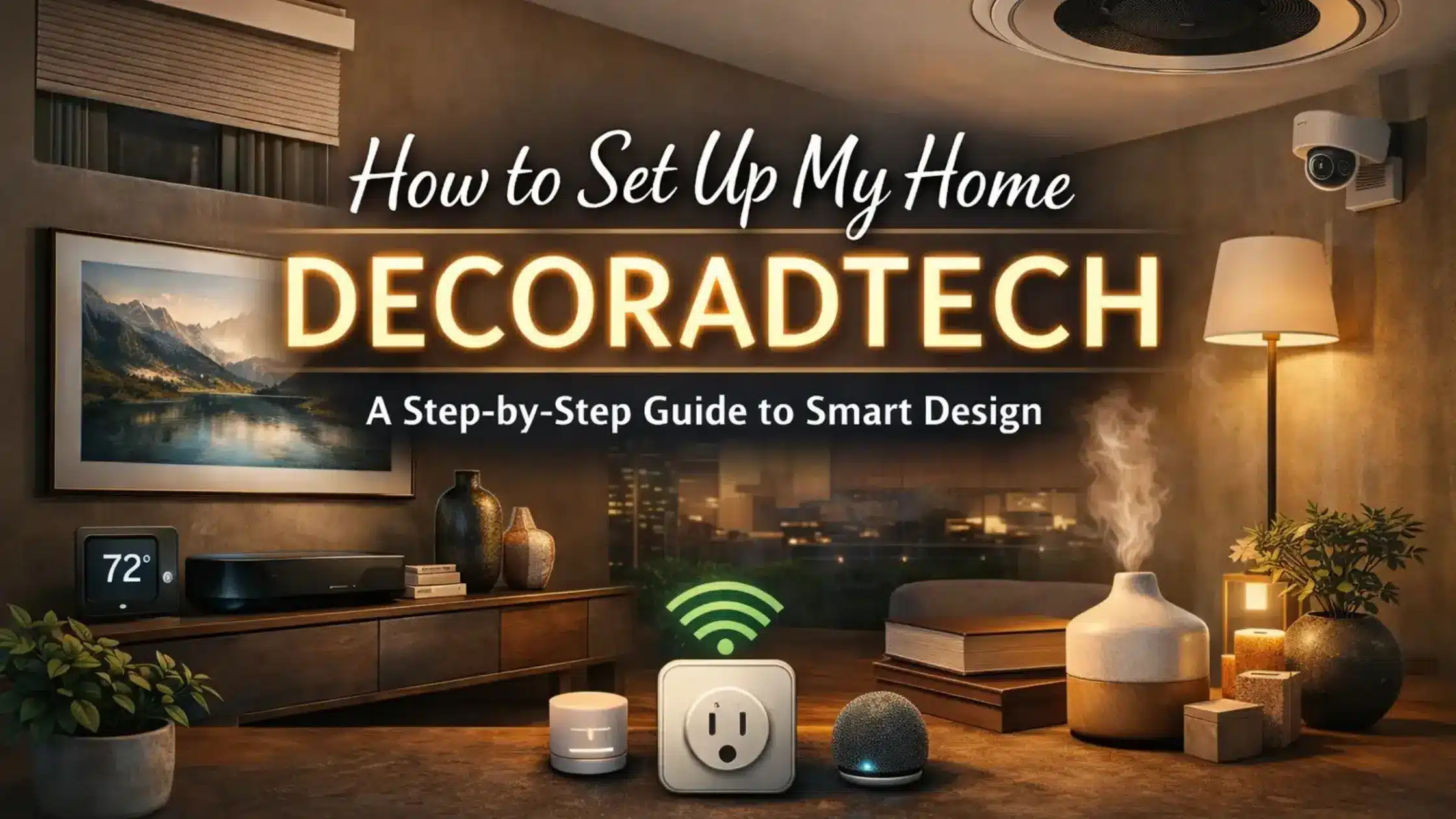
To set up your home decoradtech, you must integrate smart home technology—such as automated lighting, hidden audio, and AI-driven climate sensors directly into your interior design so that the hardware is either invisible or aesthetically complementary to your decor. Begin by selecting a unified ecosystem (like Matter or Thread-enabled hubs) to ensure device synergy. Next, implement “invisible” tech solutions like motorized window treatments, recessed smart speakers, and “Frame” style televisions. Finally, use cable management systems and decorative “hacks” to hide wires, ensuring your space functions with high-tech efficiency while maintaining a curated, designer aesthetic.
Table of Contents
Understanding the “Decoradtech” Revolution
The term home decoradtech represents the intersection of high-end interior design and advanced residential technology. Gone are the days when a “smart home” meant having a glowing blue hub on every table and a tangled mess of black power cords behind the sofa.
Today, savvy homeowners in the USA are looking for a “human-first” approach. They want the convenience of voice-controlled lighting and automated security, but they want it to look like it belongs in an architectural digest spread. Achieving this requires a shift in mindset: you aren’t just “installing gadgets”; you are “layering digital textures” into your living space.
Phase 1: Strategic Planning and Niche Selection
Before you buy your first smart bulb, you need to define the “vibe” of your home smart decoradtech ecosystem. Mixing too many different brands can lead to “App Fatigue,” where you need five different apps just to turn off the lights.
1. Choosing Your “Digital Foundation”
Your setup is only as good as the protocol it runs on. I always recommend starting with a Matter-compatible hub. Matter is the new gold standard that allows Apple, Google, and Amazon devices to talk to each other. This is crucial for decor because it allows you to pick the prettiest device, not just the one that is compatible with your phone.
2. Mapping the “Silent Zones”
Identify areas where technology should be felt but not seen.
- The Entryway: Smart locks and hidden cameras that blend into the door hardware.
- The Dining Room: Circadian lighting that shifts from bright white during lunch to a candle-like amber for dinner.
The Gallery Wall: Using digital canvases or “E-ink” displays that mimic the texture of paper.
Phase 2: Mastering Home Hacks Decoradtech for a Clean Look
The biggest enemy of a beautiful home is the “cable snake.” Here is how I personally handled the transition from a tech-cluttered mess to a streamlined home hacks decoradtech sanctuary.
The Art of the Hidden Hub
Most people put their Wi-Fi router and smart bridges on top of the TV stand. This is a design sin. Instead, use a ventilated media console. If your signal struggles, look for mesh Wi-Fi nodes that are designed to look like minimalist sculptures or ceramic vases. Brands are finally realizing that we don’t want “spaceships” in our living rooms.
The “Frame” TV and Beyond
If you have a large black rectangle sitting above your fireplace, you haven’t mastered home decoradtech yet. Using a TV that transitions into high-resolution art when off is the ultimate hack.
- Pro Tip: Don’t just use the stock art. Upload photos of high-texture oil paintings or even personal travel photos that match your room’s color palette.
Invisible Audio
Instead of bulky floor speakers, consider in-ceiling architectural audio or “picture frame” speakers. These use vibrations across a flat surface to produce high-fidelity sound without taking up a single square inch of floor space.
Phase 3: Applying Professional Design Rules to Your Tech
To make your tech look “expensive,” you need to follow the same rules that interior designers use for furniture and art.
The 70/20/10 Rule in a Tech Context
- 70% Organic Materials: Focus on wood, stone, and fabric. These should dominate the room.
- 20% Functional Tech: This is your visible tech—your sleek soundbar, your smart thermostat, or your high-end coffee machine.
- 10% Digital Accents: This is where you use “adtech” for flair—LED accent strips under the bed or a smart neon sign in the office.
The 3-5-7 Rule for Smart Accessories
When placing smart sensors or small speakers, never place one alone. Group a smart speaker with a book and a plant (Group of 3). This makes the technology look like a curated “vignette” rather than a stray piece of plastic left on the table.
Phase 4: Advanced Home Smart Decoradtech Integrations
Once the basics are covered, it’s time to move into advanced territory. This is where your home starts to feel like it’s living and breathing with you.
Circadian Lighting Design
This is the pinnacle of smart home decoradtech. By programming your smart bulbs to follow the sun’s natural path, your home supports your biological clock.
- 9:00 AM: 5000K (Cool Blue/White) to boost cortisol and focus.
- 3:00 PM: 4000K (Natural Daylight) for steady productivity.
- 8:00 PM: 2000K (Warm Sunset/Amber) to trigger melatonin production.
Climate and Scent Integration
True luxury is sensory. Use smart plugs with traditional high-end diffusers, or integrated HVAC scent systems. You can program your home to smell like “Fresh Linen” during your morning workout and “Sandalwood” during your evening wind-down. This is home decoradtech for the soul.
Phase 5: Troubleshooting and Longevity
One concern I often hear is: “Won’t my tech be obsolete in two years?” The answer is yes—if you buy the wrong stuff. To ensure your home decoradtech lasts:
- Prioritize Hard-Wired over Battery: Whenever possible, hard-wire your tech. Changing 50 batteries every six months is a chore that will make you hate your smart home.
- Stick to “Silent” Brands: Choose brands that don’t have loud, flashing “status lights.” A blinking red light in a dark, moody bedroom is the opposite of good design.
- Use “Bridge” Technology: Use smart plugs to turn “dumb” vintage lamps into smart ones. This allows you to keep your heirloom furniture while gaining modern control.
The Ultimate Decoradtech Setup Checklist
If you are starting today, follow this order of operations:
- [ ] Step 1: Upgrade your internet to a Mesh Wi-Fi system.
- [ ] Step 2: Choose a primary ecosystem (Apple, Google, or Amazon).
- [ ] Step 3: Install smart switches instead of smart bulbs (this allows you to use any designer light fixture).
- [ ] Step 4: Implement cable management (trunking, sleeves, and hidden boxes).
- [ ] Step 5: Add “Atmospheric” tech (motorized shades and smart scent).
- [ ] Step 6: Set up “Scenes” (e.g., “Movie Night” dims the lights, lowers shades, and turns on the soundbar).
Frequently Asked Questions
What is the 3-5-7 rule of decorating?
The 3-5-7 rule suggests that grouping objects in odd numbers creates a more dynamic and visually pleasing arrangement. In a home decoradtech setup, you should group your tech devices with non-tech items. For example, place a smart speaker, a small succulent, and a stack of two books together to create an intentional “lifestyle” look.
What is the 70 20 10 rule in decorating?
This is a color and styling ratio. 70% of your room should be the base color and primary furniture, 20% should be a secondary color or statement pieces, and 10% should be accent colors. For home smart decoradtech, ensure your tech hardware fits into that 10% accent category so it doesn’t dominate the room’s personality.
What is the 3 4 5 rule in decorating?
This rule refers to the layering of heights. To avoid a flat-looking room, ensure you have decor (and tech) at three different height levels: floor level (subwoofers/rugs), eye level (TVs/Art), and ceiling level (lighting). This creates a sense of depth and professional “flow.”
What is the 2/3 rule for living rooms?
The 2/3 rule is about scale. Your coffee table should be 2/3 the length of your sofa, and your wall art (or smart TV) should be 2/3 the width of the furniture below it. Following this rule ensures your home decoradtech hardware looks proportional and balanced rather than “top-heavy” or cramped.
Is decoradtech expensive to maintain?
It can be if you use many battery-operated devices. However, a well-planned setup using smart switches and hard-wired components is very low-maintenance. The primary “cost” is the occasional software update or the need to upgrade your hub every 5–7 years.
How do I hide wires for a wall-mounted smart TV?
The most professional way is to run the wires behind the drywall using an in-wall power kit. If you are renting, use paintable cable raceways that stick to the wall and blend into the paint color, effectively making the wires “disappear.”
Can I use smart tech with antique furniture?
Yes! This is a core part of home hacks decoradtech. You can use smart plugs to automate antique brass lamps, or hide a smart speaker inside a hollowed-out vintage radio cabinet. This preserves the “soul” of the room while adding 21st-century functionality.

Leave a Reply